

Outsourced vs In-House Photo Editing: Full Cost Breakdown
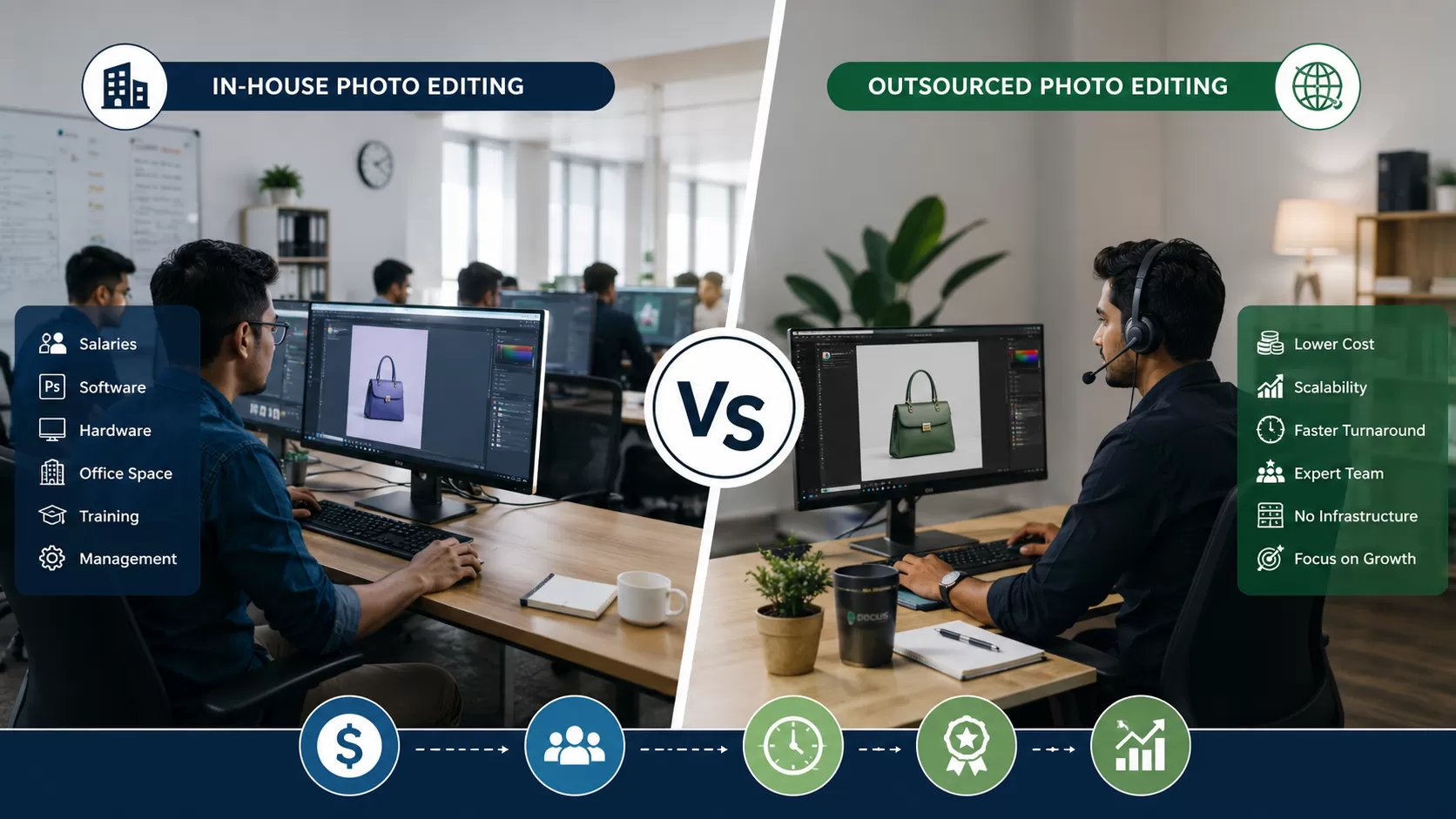
For many ecommerce brands, photography studios, and creative agencies, photo editing eventually becomes a scaling problem.
At the beginning, editing images internally usually feels manageable. A small team handles product photos, retouching, background removal, and basic corrections without much difficulty.
But as image volume grows, things start changing quickly.
More products need editing. Deadlines become tighter. Seasonal campaigns increase workload. Revisions pile up. Suddenly, businesses are no longer asking:
“Who will edit these images?”
They’re asking:
“Should we continue editing in-house, or would outsourcing make more sense financially?”
It’s a valid question - and honestly, there’s no one-size-fits-all answer.
Both in-house and outsourced photo editing have advantages. The right choice usually depends on:
- image volume
- turnaround requirements
- budget
- quality expectations
- long-term scalability
But when businesses compare the actual costs involved, outsourcing often becomes far more practical than expected.
Let’s break it down properly.
What Is In-House Photo Editing?
In-house photo editing means building your own internal editing team.
This usually includes:
- hiring photo editors or retouchers
- purchasing editing software
- setting up hardware and workstations
- managing revisions internally
- handling workflow coordination
Some businesses prefer this model because it gives them direct control over production and communication.
For brands with large daily editing requirements, an internal team can sometimes feel more organized and accessible.
But the real costs of maintaining an in-house editing setup are often much higher than businesses initially expect.
What Is Outsourced Photo Editing?
Outsourced photo editing means working with an external editing company or professional retouching service instead of hiring full-time internal staff.
The editing partner handles tasks like:
- Background removal
- Product retouching
- Portrait editing
- Clipping paths
- Jewelry retouching
- Bulk ecommerce image processing
Instead of paying salaries and infrastructure costs, businesses typically pay:
- Per image
- Per project
- Or through monthly volume-based pricing
This model has become increasingly common for:
- E-commerce brands
- Wedding photographers
- Real estate agencies
- Fashion businesses
- Jewelry companies
especially when scaling image production quickly.
The Real Cost of In-House Photo Editing
Many businesses only calculate employee salaries when comparing costs.
But in reality, in-house editing involves much more than payroll.
1. Employee Salaries
The biggest expense is usually staffing.
A professional retoucher or editor may require:
- monthly salary
- benefits
- bonuses
- paid leave
- training
And if your business handles large image volumes, one editor is rarely enough.
Many growing ecommerce brands eventually need:
- multiple editors
- quality control staff
- production managers
Those costs increase quickly.
2. Software Costs
Professional editing software is not cheap.
Most in-house teams require:
- Adobe Photoshop
- Lightroom
- cloud storage
- plugins
- collaboration tools
Software subscriptions become recurring monthly expenses.
3. Hardware & Workstations
Professional retouching requires powerful systems.
That includes:
- high-performance computers
- color-accurate monitors
- storage systems
- backup solutions
Hardware upgrades also become necessary over time, especially when handling large RAW files and commercial workflows.
4. Training & Skill Development
Editing trends and client expectations constantly evolve.
Internal teams often require:
- ongoing training
- workflow updates
- quality improvement sessions
- software learning
And when experienced editors leave, businesses must repeat the hiring and training process again.
5. Management & Production Time
One hidden cost businesses underestimate is management overhead.
Someone still needs to:
- assign work
- review edits
- handle revisions
- maintain consistency
- manage deadlines
As editing volume grows, managing production can become a full-time responsibility by itself.
The Cost Advantages of Outsourcing
This is where outsourcing becomes attractive for many businesses.
Instead of building infrastructure internally, companies gain access to an already established editing workflow.
1. Lower Operational Costs
With outsourcing, businesses usually avoid:
- hiring costs
- office expenses
- software subscriptions
- workstation setup
- employee management
Most editing services already have experienced teams and production systems in place.
That dramatically reduces overhead.
2. Easier Scalability
One of the biggest advantages of outsourcing is flexibility.
During peak seasons, businesses can increase image volume without:
- hiring temporary staff
- expanding office space
- upgrading systems
This is especially useful for:
- holiday ecommerce campaigns
- wedding seasons
- fashion launches
- jewelry collections
Scaling internally is much slower and more expensive.
3. Faster Turnaround Times
Professional editing companies often work with dedicated production teams.
That allows them to handle:
- bulk orders
- overnight delivery
- large ecommerce catalogs
- urgent revisions
In-house teams can struggle when workload suddenly increases.
4. Access to Specialized Expertise
Different types of editing require different skills.
For example:
- jewelry retouching
- beauty retouching
- ghost mannequin editing
- real estate editing
all require specialized experience.
Outsourcing gives businesses access to editors who already specialize in these areas instead of training an internal team from scratch.
In-House vs Outsourced Photo Editing: Cost Comparison
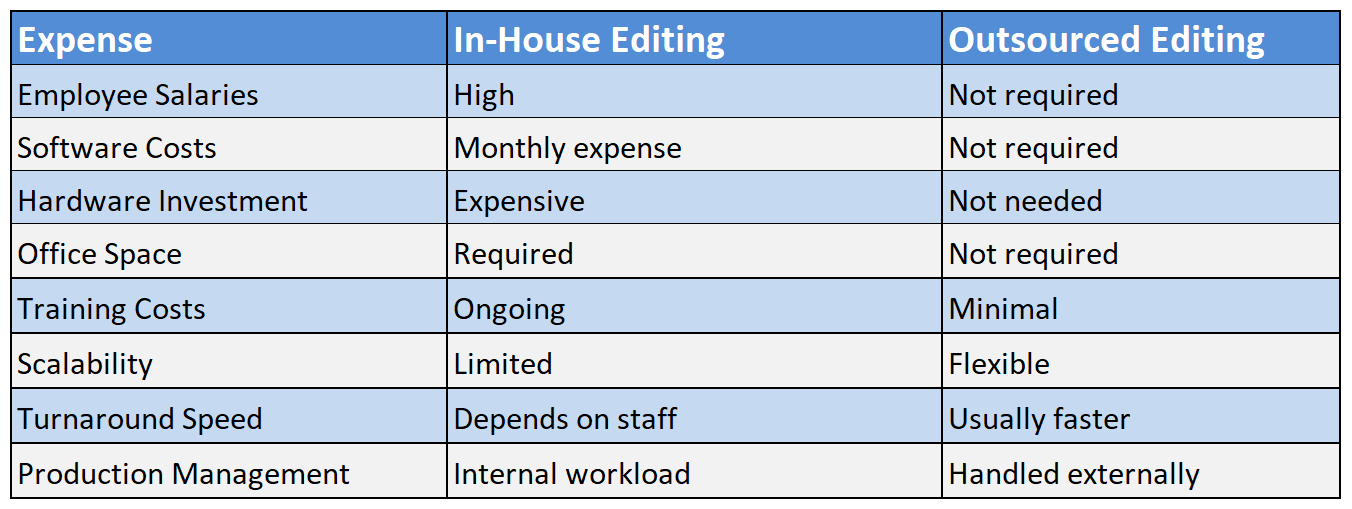
So Which Option Is Better?
The answer depends on the business.
Some large companies with massive daily production needs may benefit from maintaining internal editing teams.
But for many growing businesses, outsourcing is often more cost-effective because it reduces:
- operational expenses
- management pressure
- hiring challenges
- production delays
At the same time, it allows businesses to scale faster without sacrificing quality.
That’s one reason why many ecommerce brands, photographers, and agencies now combine small internal teams with outsourced editing support.
The Hybrid Approach Is Becoming More Common
Interestingly, many businesses no longer choose only one option.
Instead, they use a hybrid workflow.
For example:
- internal teams manage creative direction
- outsourced editors handle bulk production
This allows businesses to maintain brand control while still reducing operational costs.
In many cases, it’s the most practical long-term solution.
Final Thoughts
Choosing between outsourced and in-house photo editing is no longer just a creative decision - it’s a business decision.
In-house editing offers direct control, but it also comes with significant costs related to staffing, software, hardware, management, and scalability.
Outsourced photo editing provides flexibility, lower operational overhead, and easier production scaling, especially for growing ecommerce brands and photography businesses.
For many companies, the smartest solution is not replacing internal teams completely - it’s combining internal creativity with outsourced production efficiency.
And as image demands continue growing, that approach is becoming increasingly common across the industry.
Need Reliable Outsourced Photo Editing Services?
At Global Photo Edit, we help ecommerce brands, photographers, agencies, and studios scale their editing workflows with professional-quality retouching services.
Our services include:
- Product photo editing
- Jewelry retouching
- Portrait retouching
- Background removal
- Ghost mannequin editing
- Bulk ecommerce image editing
Try our free sample editing service and see how outsourcing can save both time and production costs.
Frequently Asked Questions
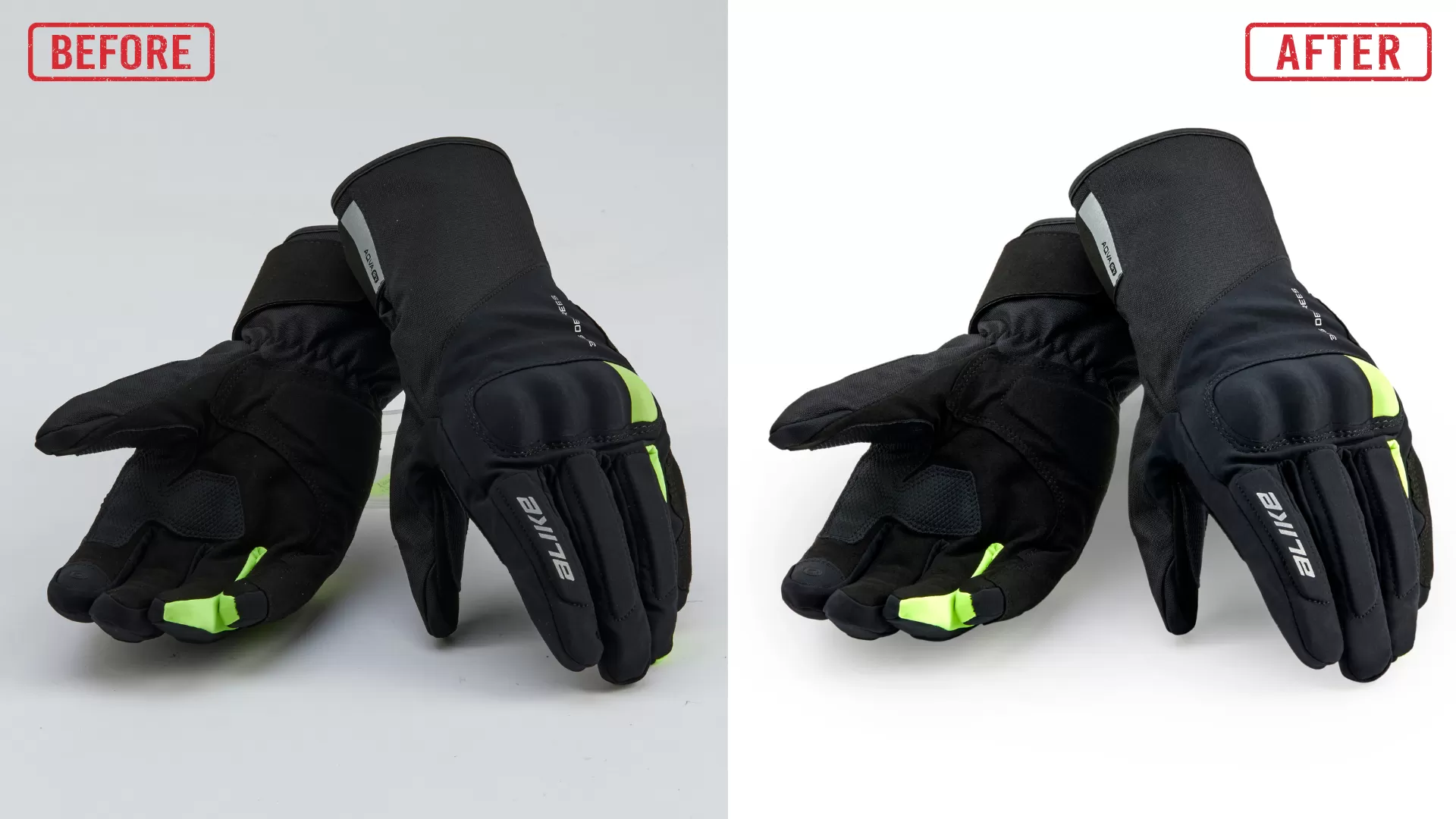
Role of E-commerce Product Image Retouching, and Editing Services
The global marketplace is increasingly shifting towards e-commerce for selling products. In this environment, advanced...
Read More
Best 6 AI Tools for Professional Photo Editing in 2024
As the world continues to grow digitally, there is not any day that goes without...
Read More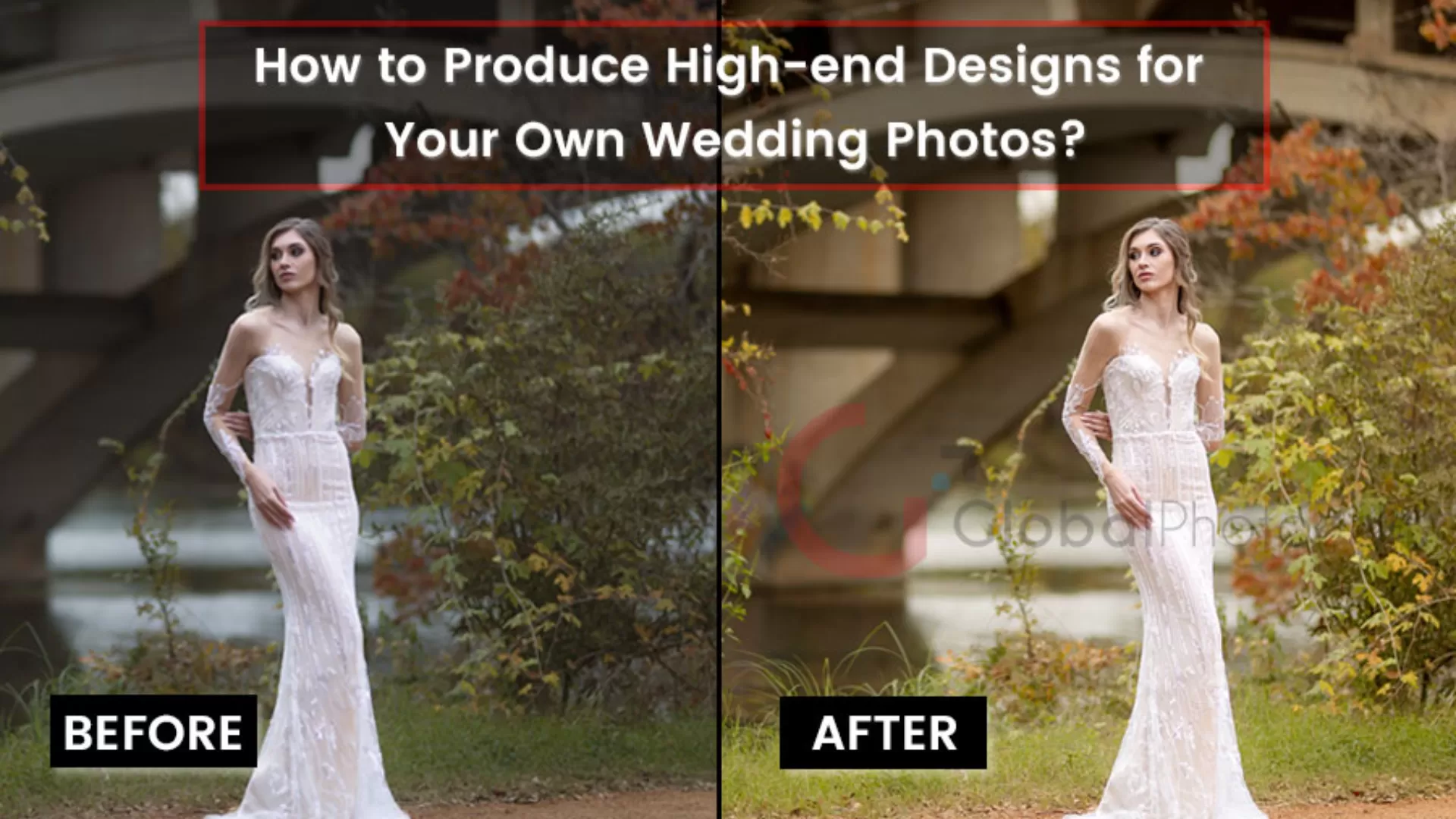
How to Produce High-end Designs for Your Own Wedding Photos?
Weddings are fun, but alternatively choosing the perfect pictures for your wedding album is a...
Read More
The Role of Photo Editing in Social Media Marketing
The need to have a strong presence on social media platforms comes with this fact....
Read More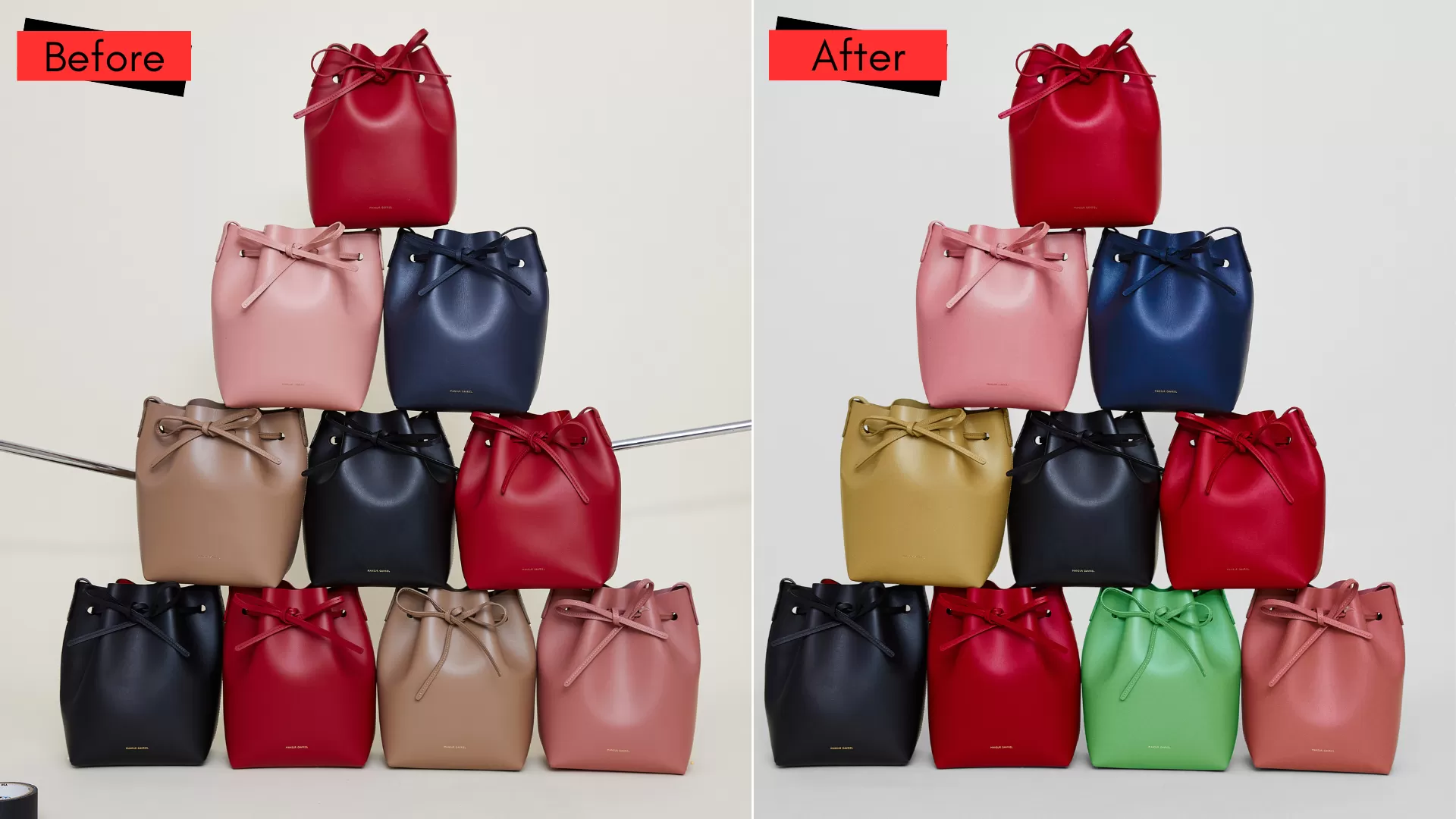
Are you looking for bulk photo editing services? Discover Why Global Photo Edit Is the Best.
When it comes to finding a Bulk Photo Editing Services Provider, there are a few things...
Read More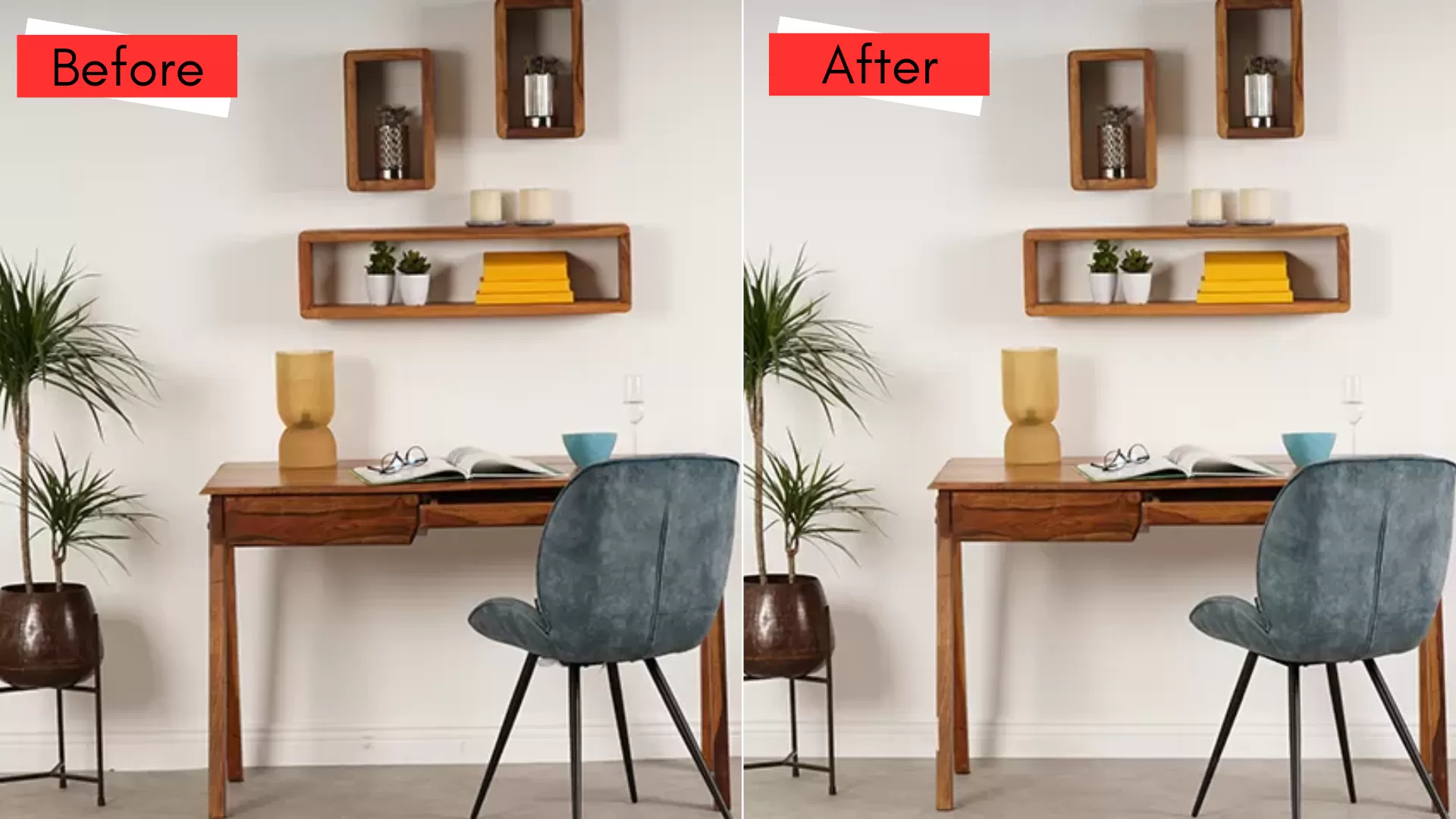
Home Furnishing Photo Editing Services: Enhancing Your Interior Design Images
Home furnishing is an essential aspect of interior design that can make or break the...
Read More