

How to Edit Product Photos for Higher Conversions
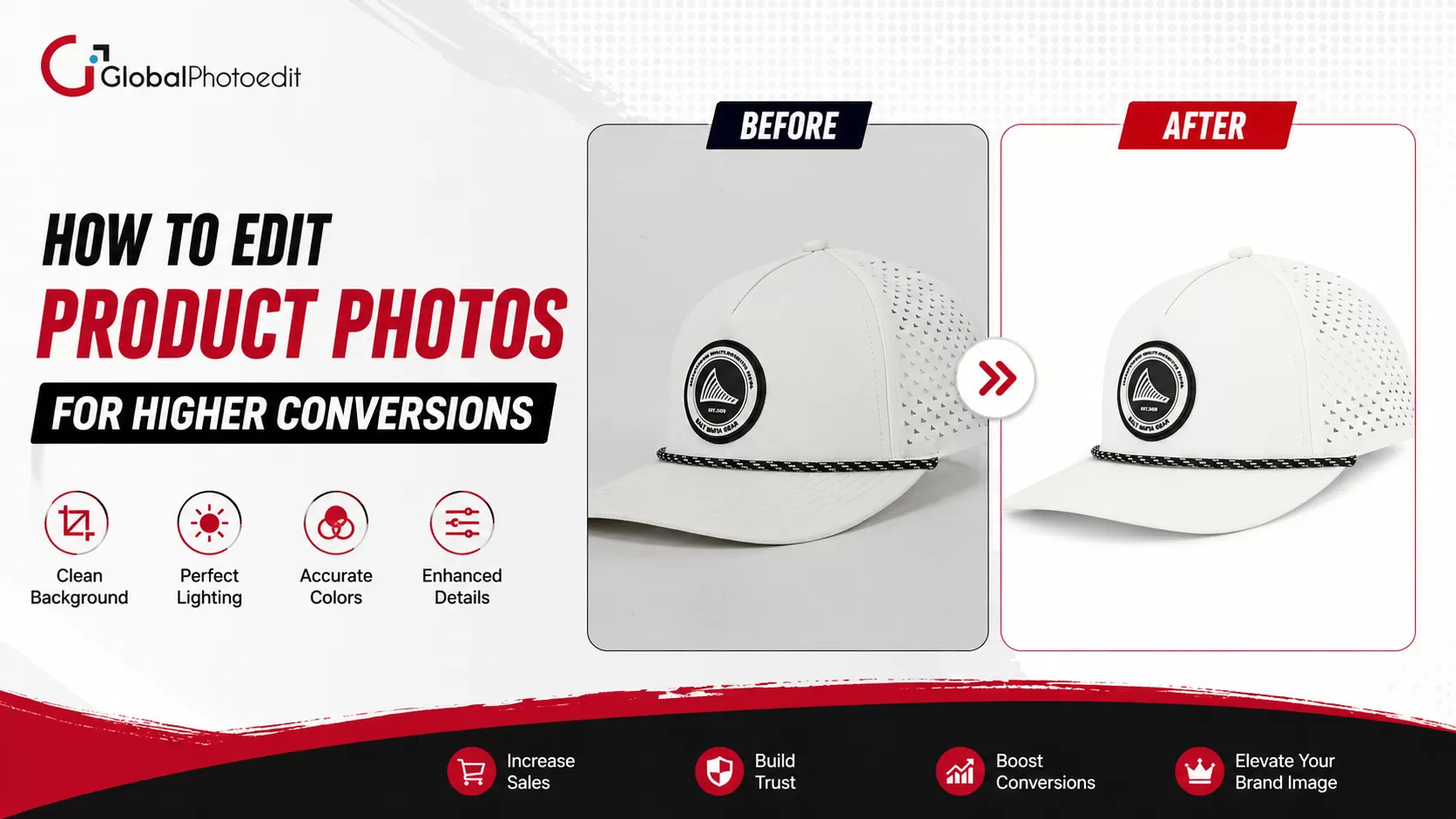
In e-commerce, customers can’t touch your product, test it, or see it in person.
Your product images do all the selling for you.
That’s why even small editing improvements can make a surprisingly big difference in conversions. Better product photos help products look more trustworthy, premium, and professional - and that directly affects whether customers click “Add to Cart” or leave the page.
Many ecommerce brands spend heavily on ads and marketing while completely overlooking the quality of their product images.
But the reality is simple:
Poor product photos reduce trust.
Professionally edited product photos increase conversions.
The good news is that improving product images usually doesn’t require reshooting everything from scratch. In many cases, proper editing alone can dramatically improve how products look online.
Here’s how professional product photo editing helps increase ecommerce conversions - and what actually matters when editing product images for sales.
Why Product Photos Matter More Than Most Brands Realize
Online shoppers make decisions incredibly fast.
Before reading descriptions or checking specifications, most customers look at product images first.
If the images appear:
- dark
- inconsistent
- low quality
- poorly cropped
- unrealistic
- overedited
Customers immediately lose confidence in the product.
On the other hand, clean and professionally edited product photos help:
- increase trust
- improve perceived product value
- create brand consistency
- reduce hesitation
- improve conversion rates
For many e-commerce businesses, product images are the first impression customers have of the brand.
And first impressions matter.
Start With a Clean Background
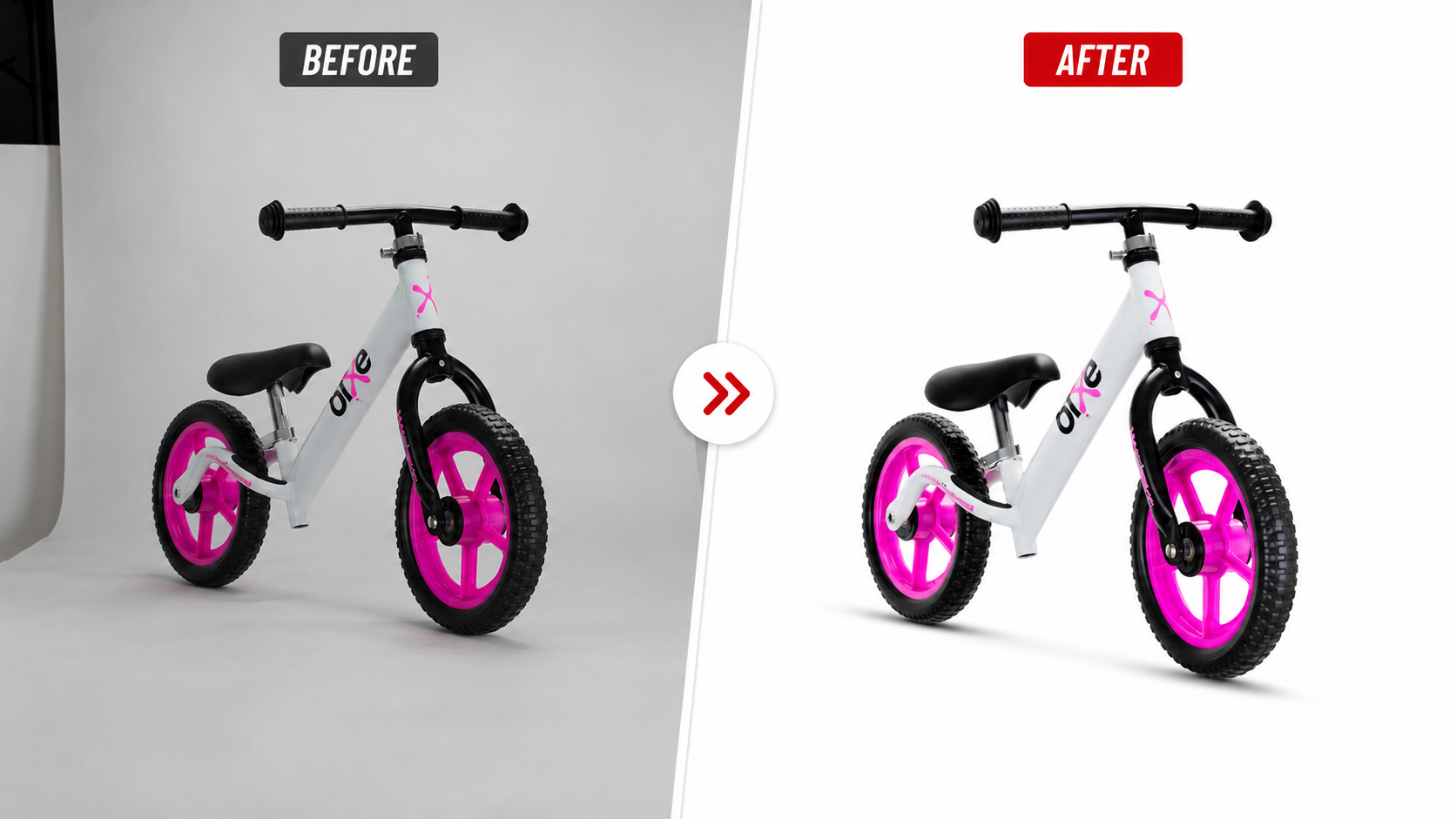
One of the biggest mistakes in ecommerce photography is using distracting backgrounds.
Busy or inconsistent backgrounds pull attention away from the product itself.
That’s why many brands use clean white or neutral backgrounds for:
- e-commerce stores
- Amazon listings
- Shopify products
- catalog images
Professional background removal helps products look cleaner, sharper, and more focused.
It also improves consistency across large product catalogs.
For many e-commerce workflows, proper background removal and clipping path editing are essential parts of product photo optimization.
Use Realistic Shadows
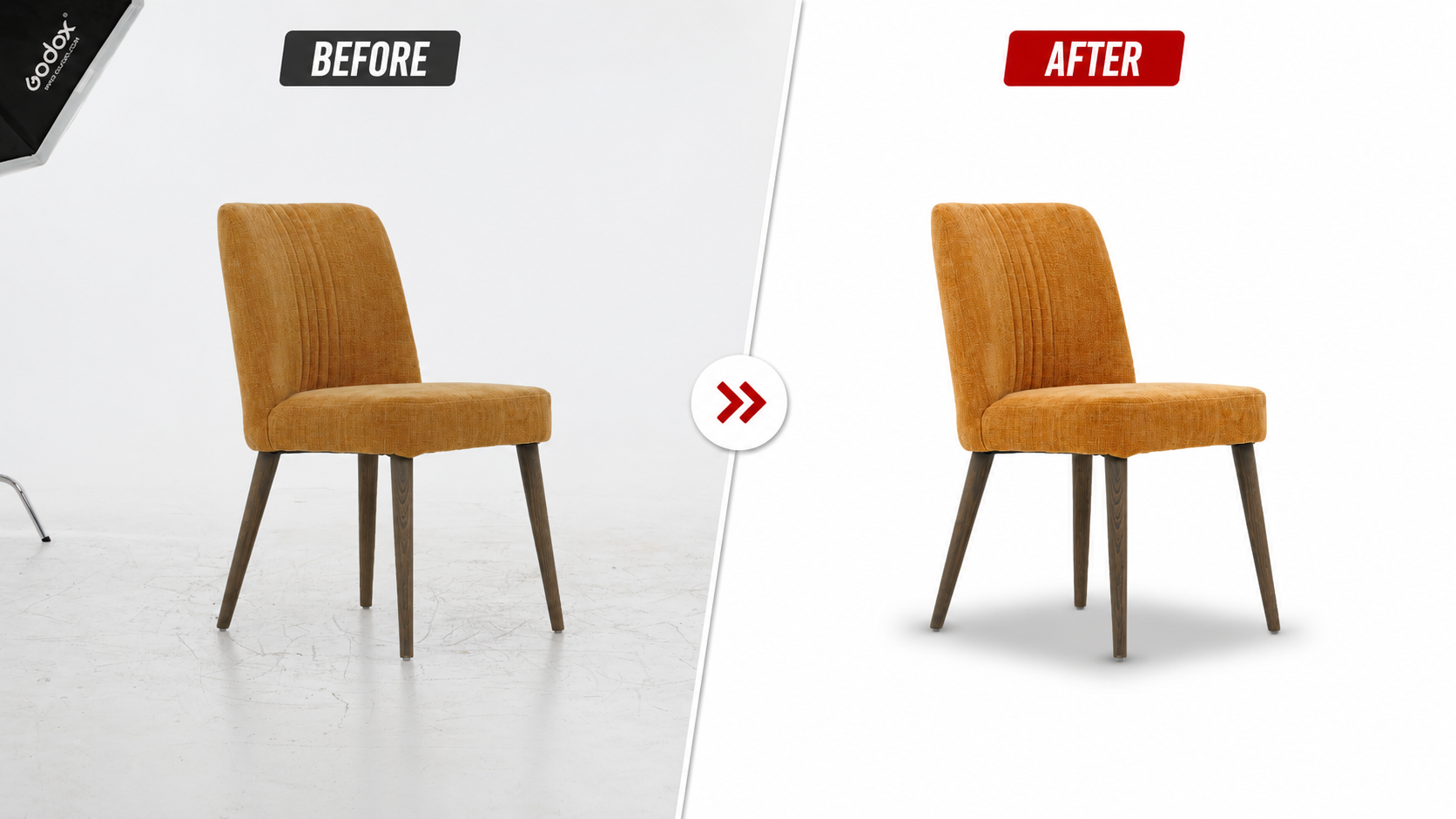
Shadows play a bigger role in conversions than most people think.
Without proper shadows, products often look flat or artificially cut out.
A realistic shadow adds:
- depth
- grounding
- dimension
- visual realism
This is especially important for:
- shoes
- apparel
- cosmetics
- jewelry
- luxury products
Many AI editing tools generate shadows automatically, but they often look unnatural or inconsistent.
Professional product photo editing usually includes manual shadow creation to make products feel more realistic and visually premium.
And subtle improvements like this can directly improve how trustworthy a product feels to customers.
Improve Color Accuracy
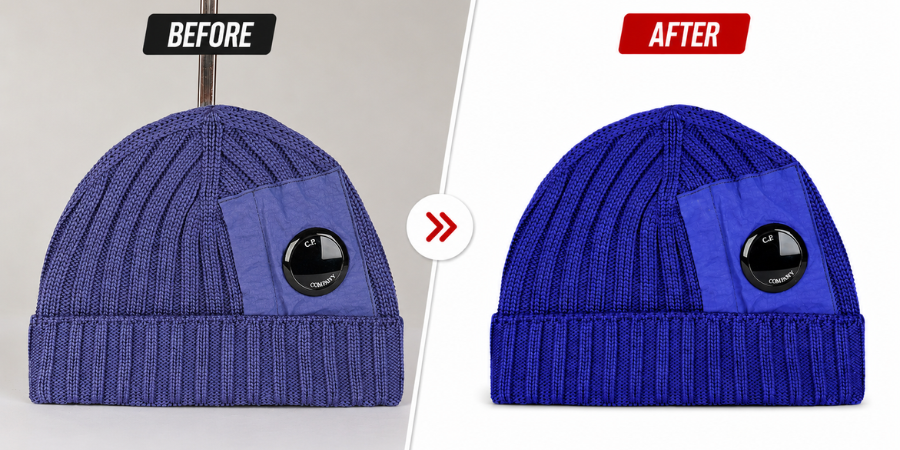
Color accuracy is critical in e-commerce.
If customers receive products that look different from the website images, return rates increase quickly.
This happens often with:
- clothing
- jewelry
- beauty products
- furniture
- accessories
Professional retouching helps maintain accurate:
- product colors
- white balance
- contrast
- lighting consistency
Good editing should enhance products without making them look fake or misleading.
In ecommerce, realistic editing almost always performs better than overly aggressive retouching.
Keep Your Product Catalog Consistent
.png "Professional Product Catalog Photo Editing - Global Photo Edit")
One thing successful ecommerce brands do extremely well is consistency.
When every product image follows the same style, the entire store looks more professional and trustworthy.
Consistency includes:
- background style
- image size
- lighting balance
- shadow direction
- cropping
- alignment
Without consistency, product pages can feel messy and unorganized.
This becomes a major issue for stores managing hundreds or thousands of products.
That’s one reason many growing brands outsource ecommerce image editing instead of handling everything internally.
Remove Dust, Scratches, and Imperfections
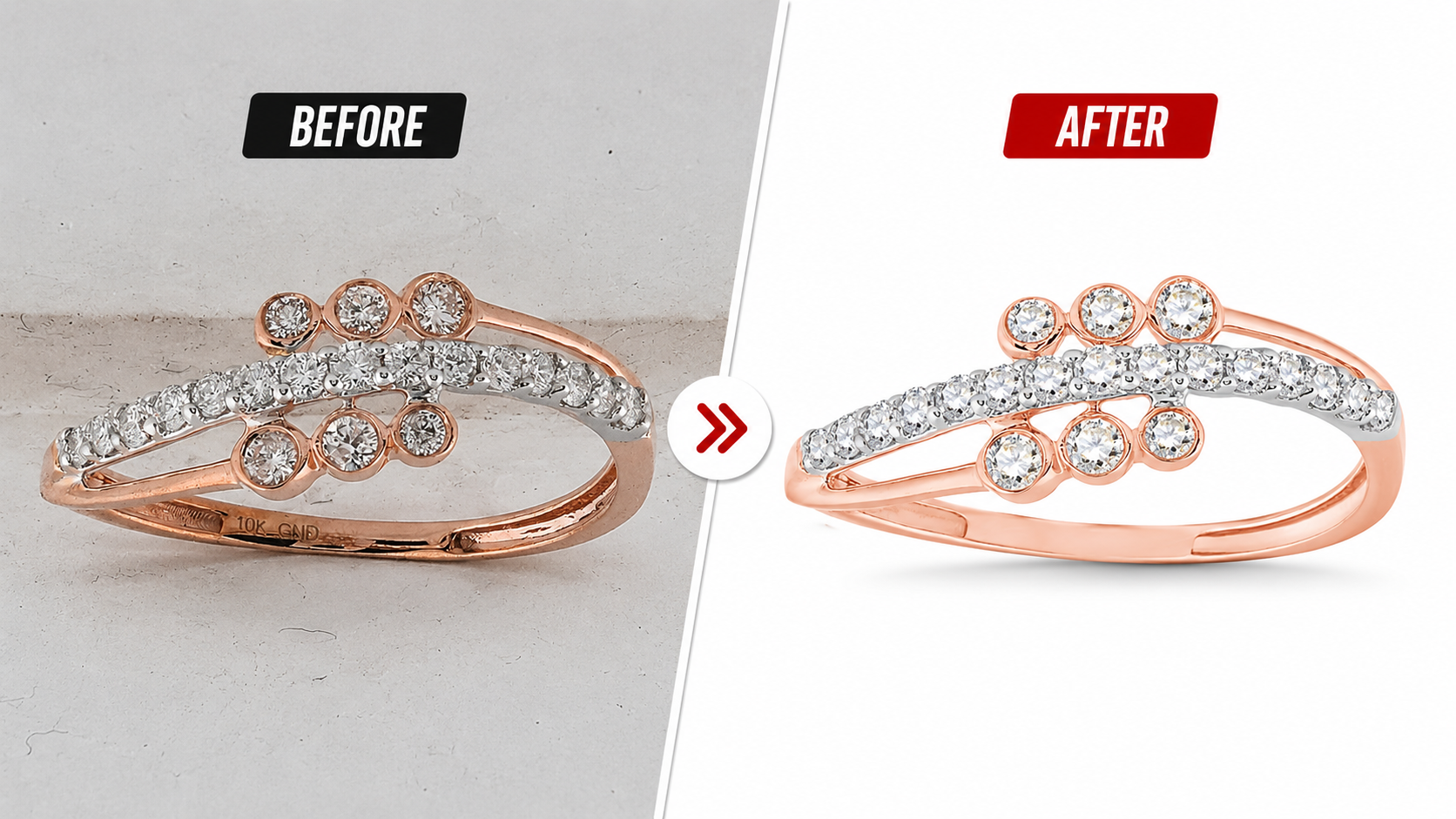
Even high-quality product photography usually requires cleanup work.
Professional editors often remove:
- dust particles
- scratches
- fingerprints
- wrinkles
- reflections
- sensor spots
Small imperfections may seem minor, but customers notice them more than brands expect.
Especially for:
- jewelry
- beauty products
- electronics
- luxury items
clean presentation directly affects perceived quality.
Professional retouching helps products look polished while still appearing realistic.
Optimize Image Size Without Losing Quality
Large product images improve visual detail, but oversized files can slow down websites.
And slow-loading product pages hurt conversions.
Good ecommerce image optimization balances:
- resolution
- sharpness
- loading speed
- mobile performance
Images should look sharp without hurting page speed.
Modern ecommerce brands often use:
- compressed WebP images
- responsive image sizing
- optimized thumbnails
to improve both SEO and user experience.
Show Products From Multiple Angles
Customers feel more confident when they can fully understand what they’re buying.
That’s why multiple product angles improve conversions so effectively.
Different angles help customers evaluate:
- texture
- size
- material
- shape
- details
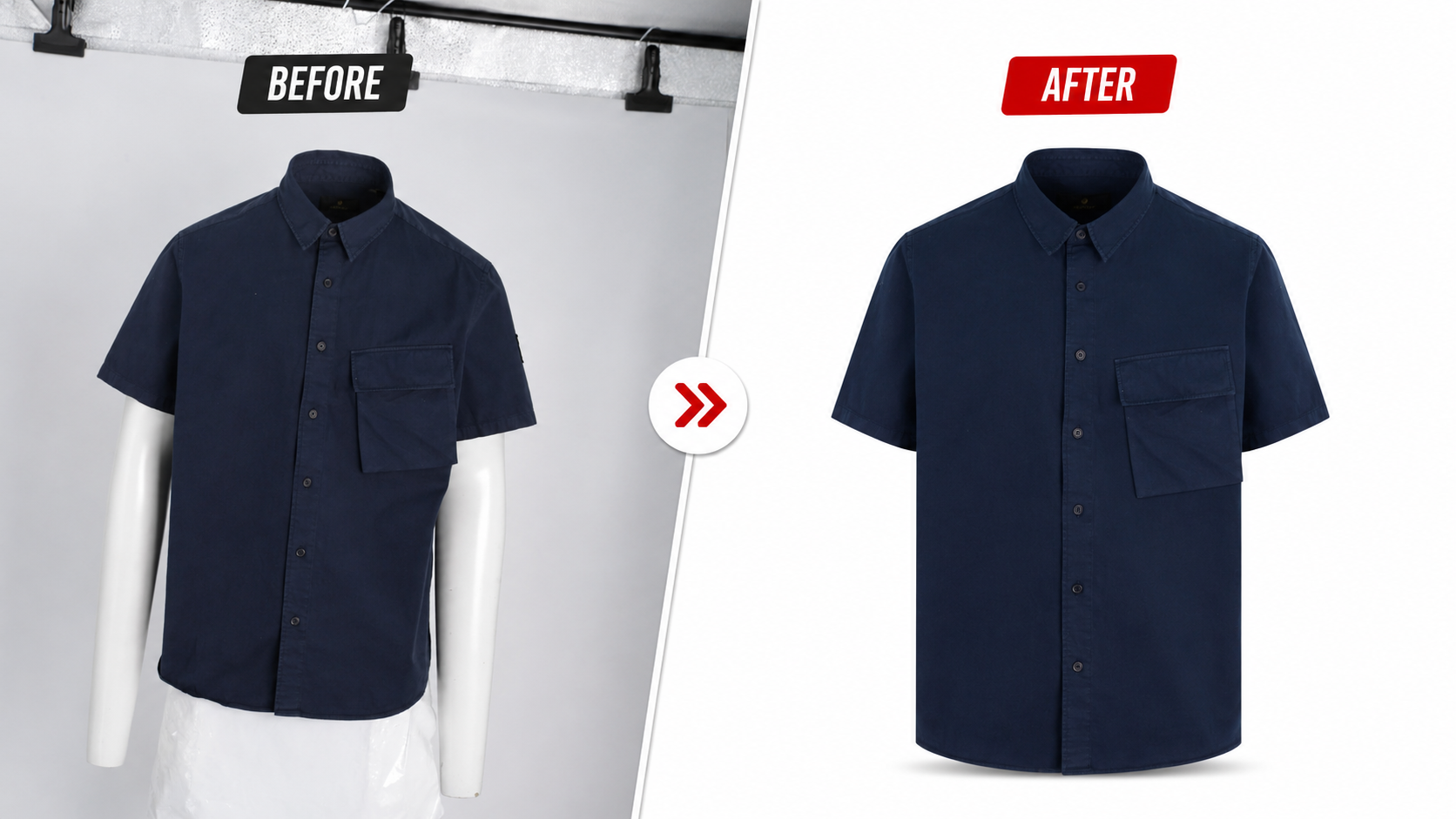
For apparel brands, ghost mannequin editing is also commonly used to create a cleaner and more professional presentation.
Professional ghost mannequin editing helps clothing products look structured without distracting mannequins appearing in the final image.
Don’t Overedit Product Images
One common mistake in ecommerce editing is making products look unrealistically perfect.
Overediting can:
- damage trust
- increase product returns
- create misleading expectations
Customers want products to look polished - but still believable.
The best product retouching usually feels invisible.
Professional editing should enhance products while maintaining realistic textures, colors, and proportions.
Why Many Ecommerce Brands Outsource Product Editing
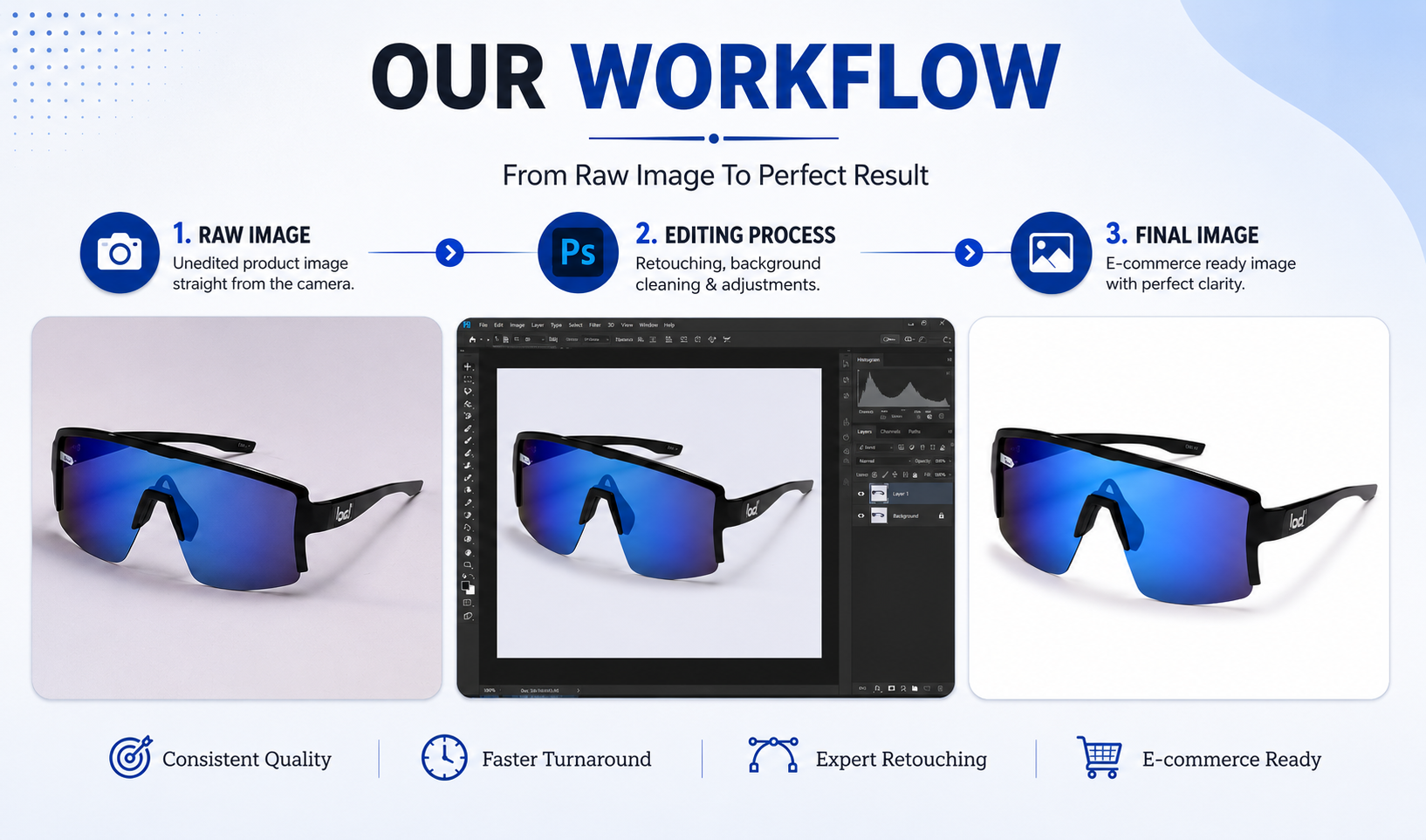
As ecommerce stores grow, managing product editing internally becomes increasingly difficult.
Brands often struggle with:
- large image volumes
- inconsistent editing
- tight deadlines
- seasonal workload spikes
That’s why many businesses outsource product photo editing services instead of building large internal editing teams.
Outsourcing helps brands:
- scale faster
- maintain consistency
- reduce production time
- improve workflow efficiency
- access professional retouching expertise
And for many ecommerce businesses, that operational efficiency directly impacts profitability.
Final Thoughts
Great product photography is important - but professional editing is often what transforms good product images into high-converting ecommerce visuals.
Clean backgrounds, realistic shadows, accurate colors, consistency, and subtle retouching all influence how customers perceive products online.
In ecommerce, image quality affects trust.
And trust affects conversions.
That’s why many successful brands invest heavily in professional product photo editing instead of relying entirely on basic filters or automated tools.
Because in competitive ecommerce markets, better visuals often lead to better sales.
Need Professional Product Photo Editing?
At Global Photo Edit, we help ecommerce brands, photographers, and online stores create clean, high-converting product images with professional retouching services.
Our services include:
- Product photo editing
- Background removal
- Ghost mannequin editing
- Jewelry retouching
- E-commerce image optimization
Try our free sample editing service and see how professionally edited product photos can improve your ecommerce presentation.
Frequently Asked Questions
Darkroom Manipulation vs. Digital Photo Manipulation
Photography is one of the oldest disciplines that developed at the beginning of the nineteenth...
Read More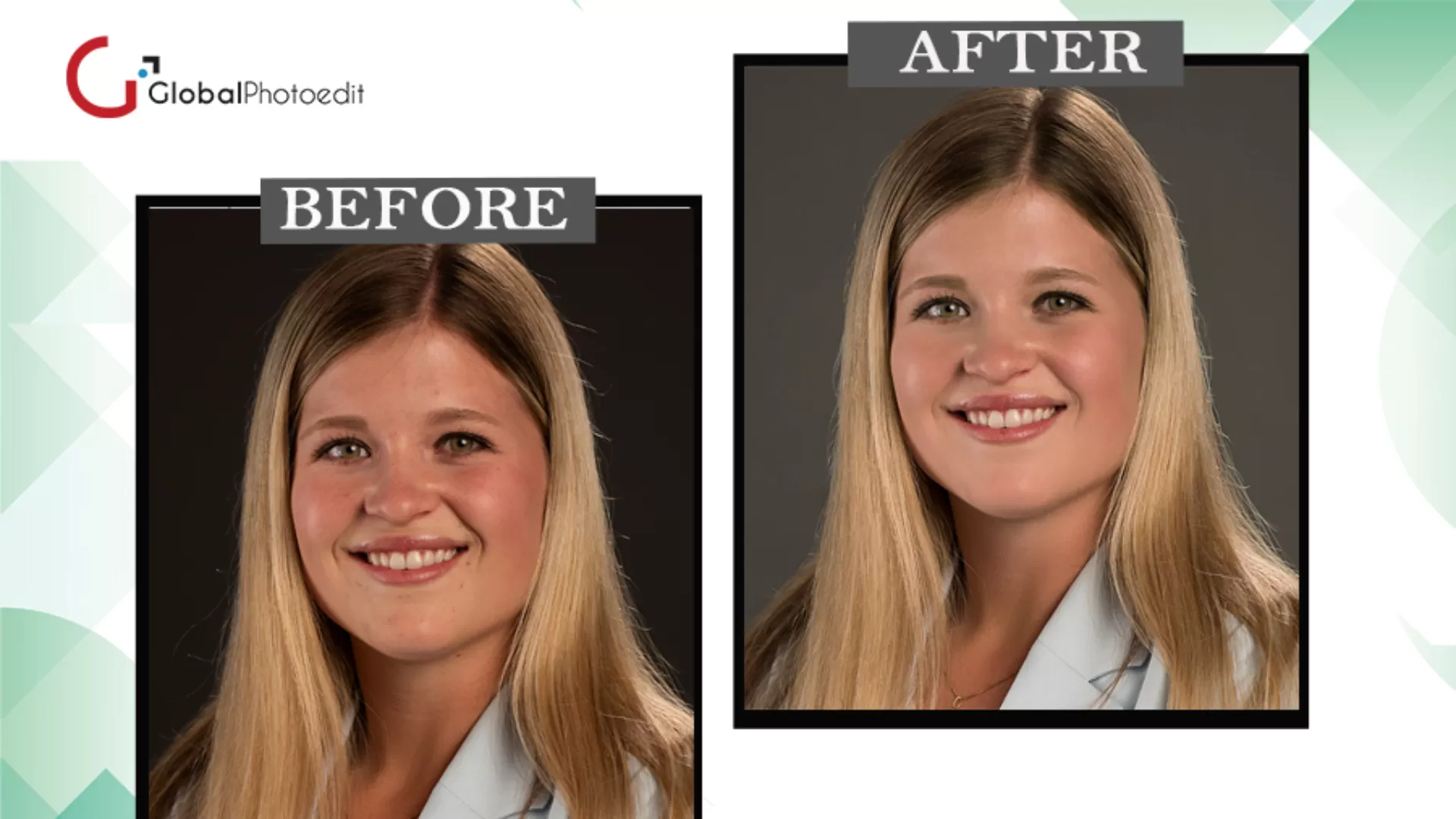
Make a Great First Impression: The Importance of Headshot Retouching Services
A great headshot is essential for professional success. Whether you’re using it for your LinkedIn...
Read More
Why Choose Global Photo Edit for Your Photo Editing Needs?
Is there any doubt that stunning visuals are the key to capturing attention and leaving...
Read More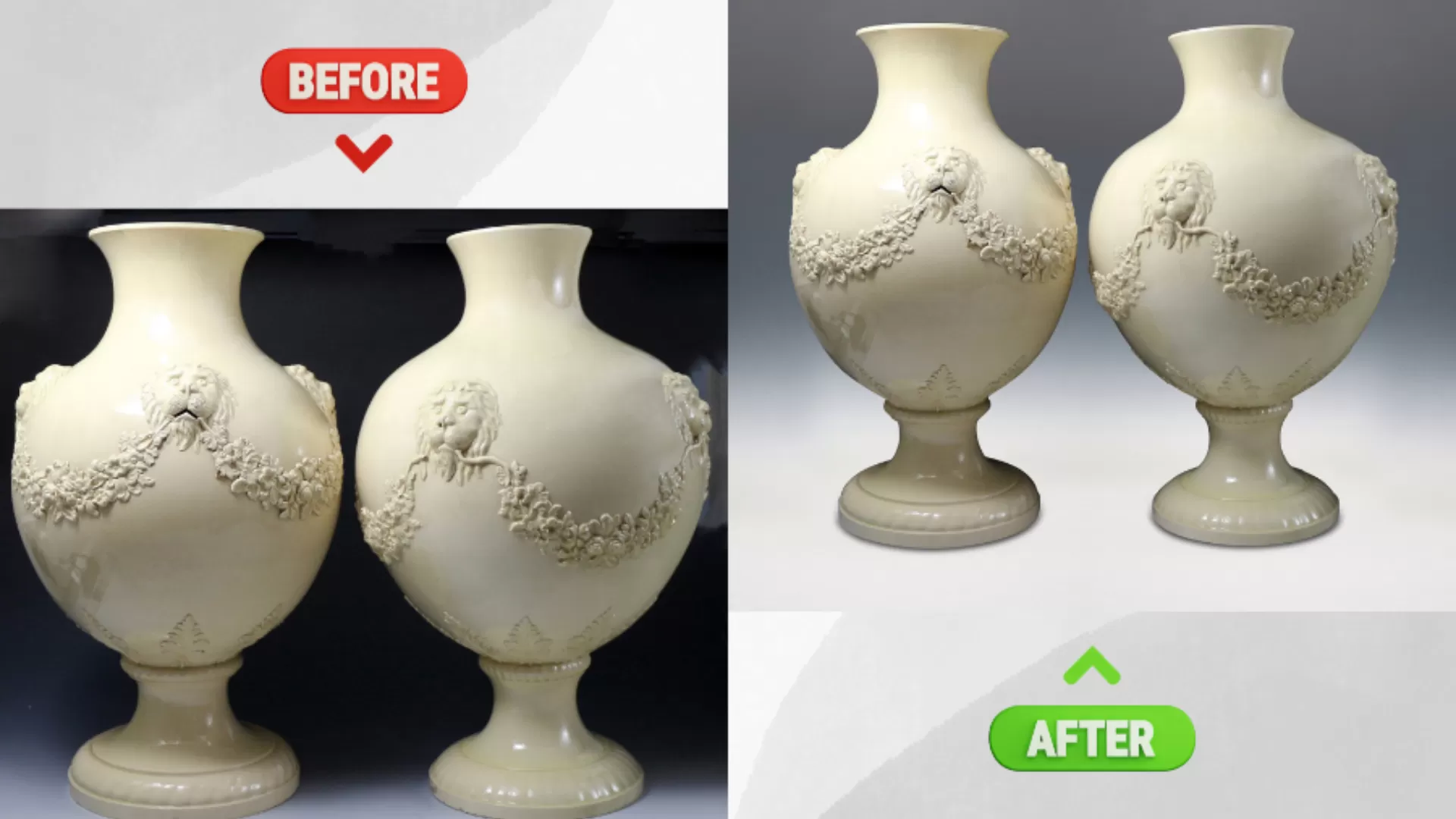
The Ultimate Guide to Online Home Furnishing Photo Retouching with Global Photo Edit
Visuals are everything in today’s digital age. They expect crystal-clear images that show the product’s...
Read More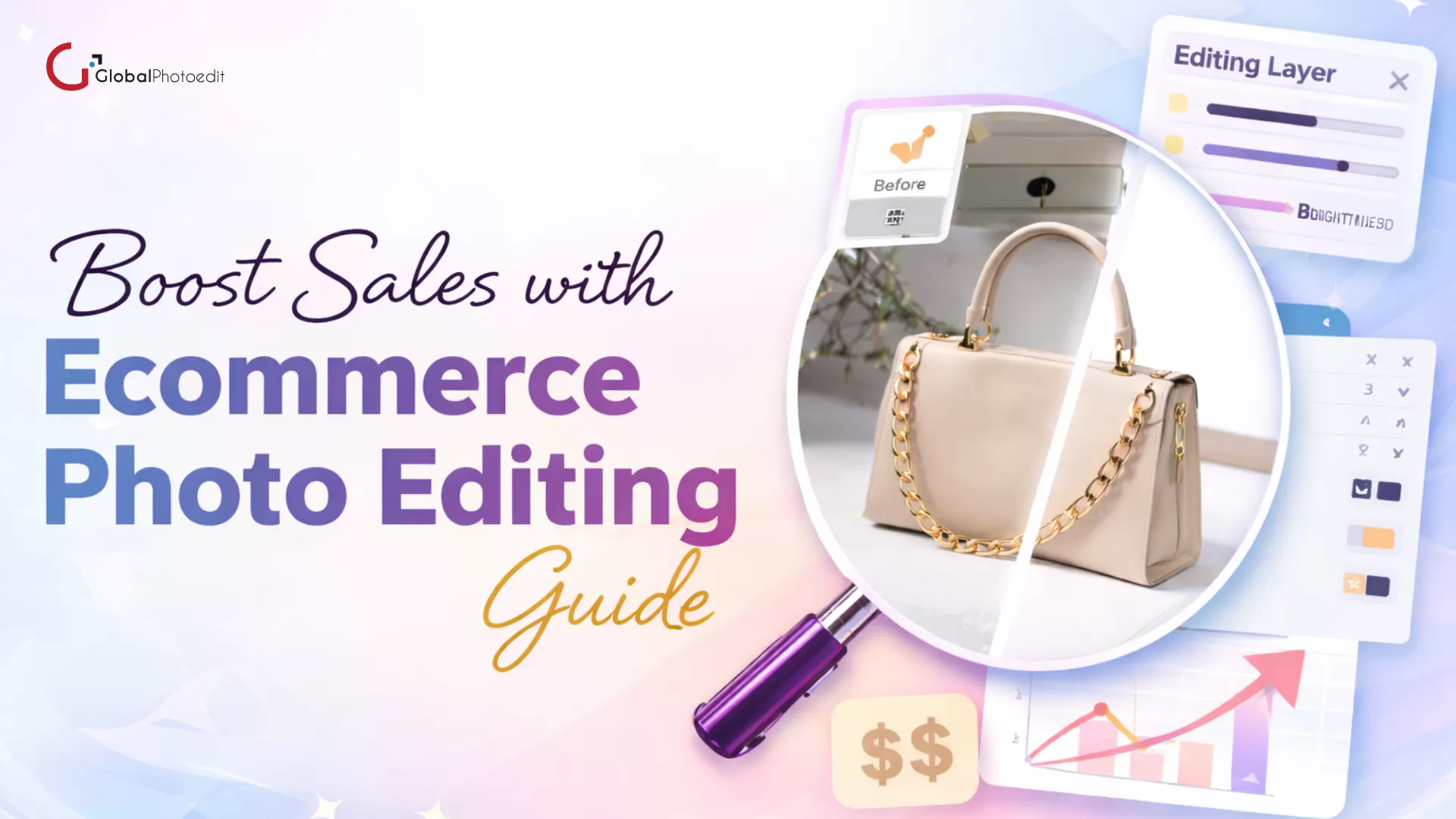
How Professional Ecommerce Photo Editing Increases Sales (2026 Guide)
In ecommerce, customers cannot touch your product. They cannot feel the texture, test the quality,...
Read More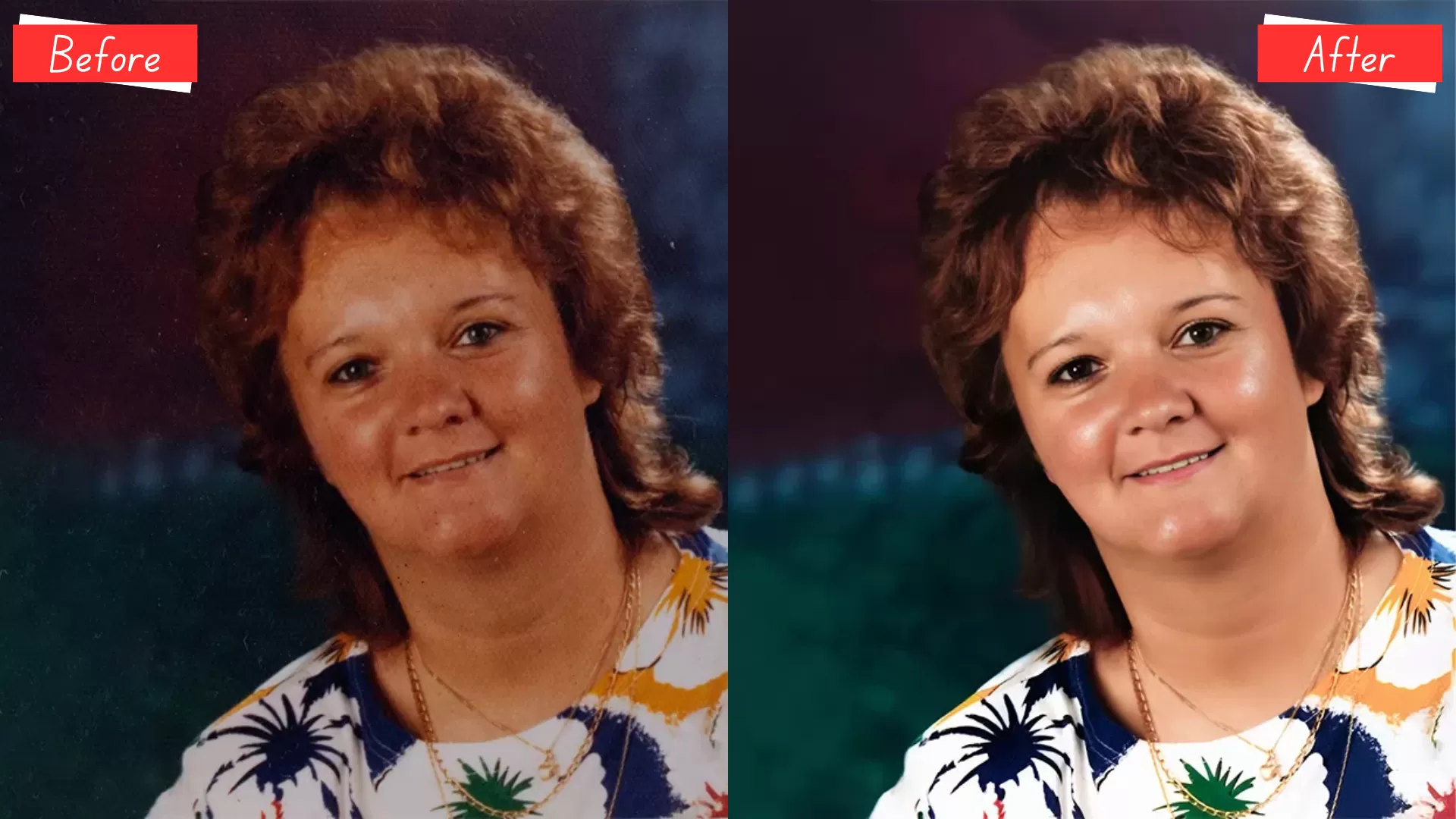
Top 5 Tips for Choosing the Best Image Restoration Service for Your Treasured Photos
Our memories are precious, and we often rely on photographs to help us preserve them....
Read More